Localization Testing Services
We provide localization testing services for companies releasing software, apps, and websites in more than one language. You get native testers checking language, layout, and core user journeys in the running product, with issue reports your developers can act on.
Book a test cycle for your next localized build before it reaches users.

- ISO/IEC 27001:2022 Certified
- SOC 2 Type II Attested
- AES-256 at Rest
- TLS 1.3 in Transit
- ATA Corporate Member
Localization Failures We Catch Before Release
Translated strings look fine in a spreadsheet. Inside the product, they meet fixed-width buttons, date pickers, and checkout forms built for one language. W3C's guide to text size in translation cites IBM data on short strings. English text of 11 to 20 characters runs to 180 to 200% of its length in European languages. That's the size of most button labels and menu items.
Here's how our localization testing handles each one before your users find it:
Every truncated label flagged.
When "Add to cart" overflows its button, checkout loses its call to action. Our testers capture each truncated or overlapping string with a screenshot.
Untranslated text found mid-flow.
Hard-coded strings, untranslated error messages, and placeholder keys get logged with the screen and the steps that triggered them.
Regional formats checked per locale.
03/04 means March 4 in the US and April 3 in much of Europe. We check dates, numbers, and currencies in every locale on the agreed list.
Strings reviewed in context.
Words translated without context end up meaning something else besides their icon. Our native testers review each string where users actually see it.
Scripts tested in the running build.
Accented characters, Asian fonts, and right-to-left text get checked inside the product, where broken glyphs and reversed text actually show up.
Language, Interface, and Functional Checks
Each test cycle covers three kinds of checks. Together they show whether the localized product reads right, looks right, and still works.
Language Quality in the Running Product
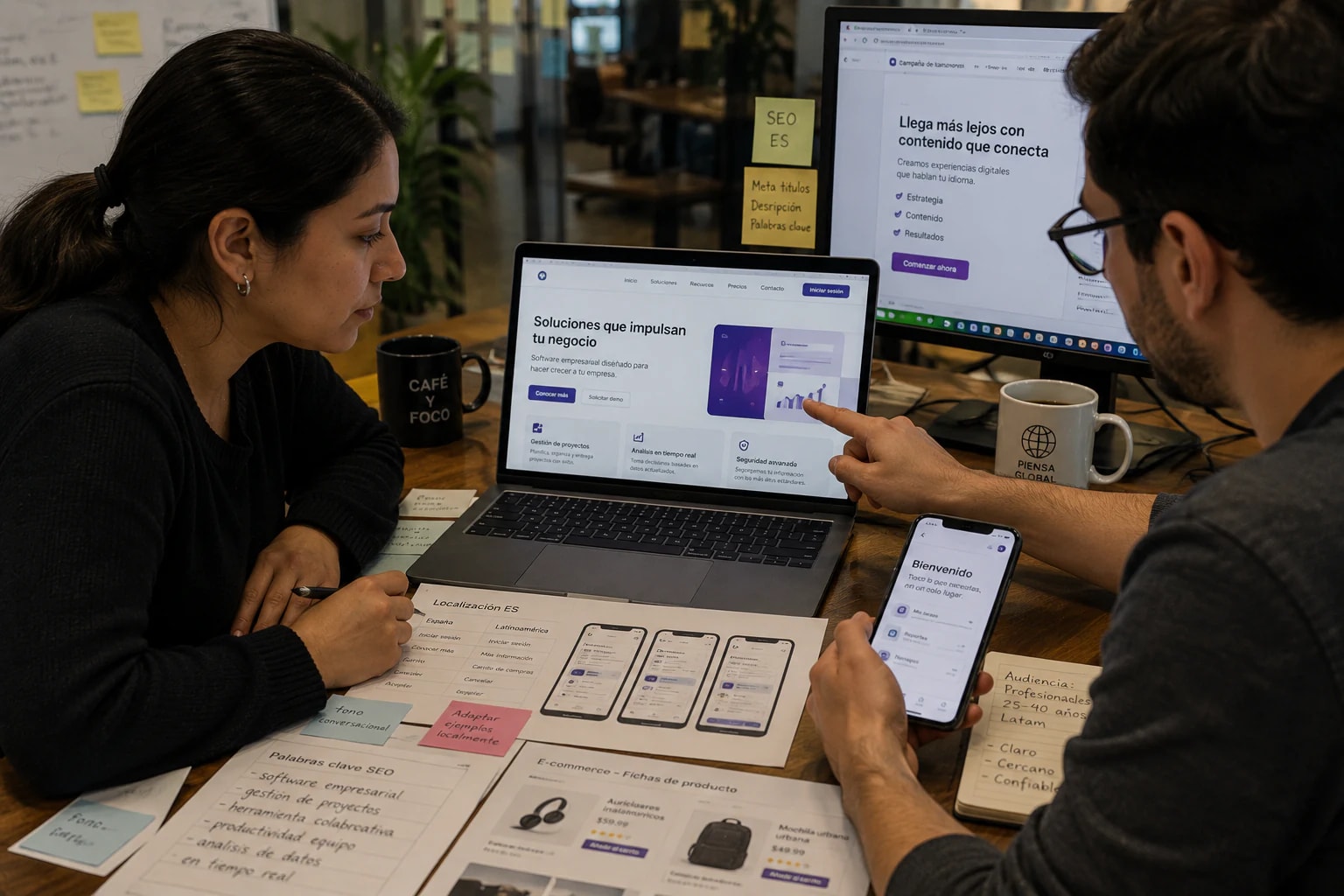
Our linguistic testing services cover grammar, terminology, tone, and context, judged by native testers inside the product. Linguistic quality assurance (LQA) testers work from your glossary and style guide, so a correction on one screen matches the wording on every other. Legal or regulatory review of the content is a separate engagement.

Layouts, Scripts, and Regional Formats
Our cosmetic checks cover truncated labels, overlapping elements, broken line wrapping, and missing fonts. For Arabic and Hebrew builds, we also check the mirrored layout. W3C's article on inline markup and bidirectional text puts the risk simply: "Whenever an opposite-direction phrase occurs, things can go wrong." Our testers then check dates, times, numbers, currencies, and address fields against each locale's conventions.

Functional Checks for Agreed User Journeys
Our functional testing confirms the localized build still works. Forms accept local input, locale switching keeps the user's place, sorting follows the target alphabet, and links open the right regional pages. Our testers run the journeys agreed at planning, such as sign-up, onboarding, search, or checkout.
Coverage Defined by Locale, Build, and User Journey
We set the coverage with you up front: locales, build version, devices or browsers, and journeys, plus anything excluded. The final report shows what we tested and what we didn't.

Software localization testing:
Desktop and web applications built through our software localization services or by your own team
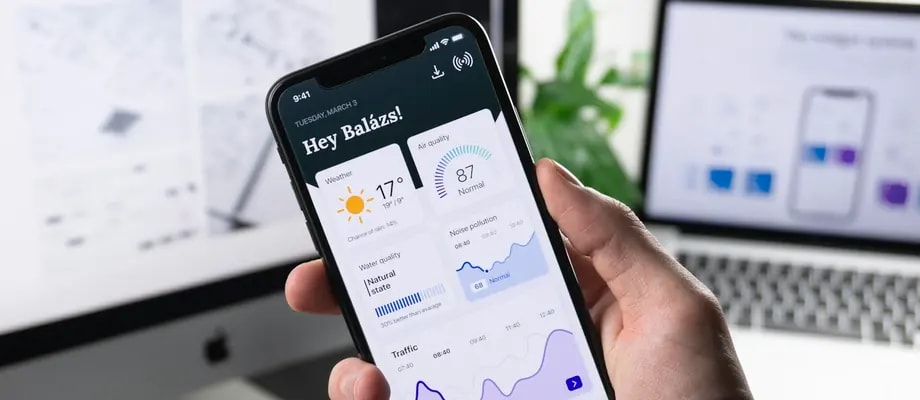
App localization testing:
iOS and Android builds, alongside our app localization services
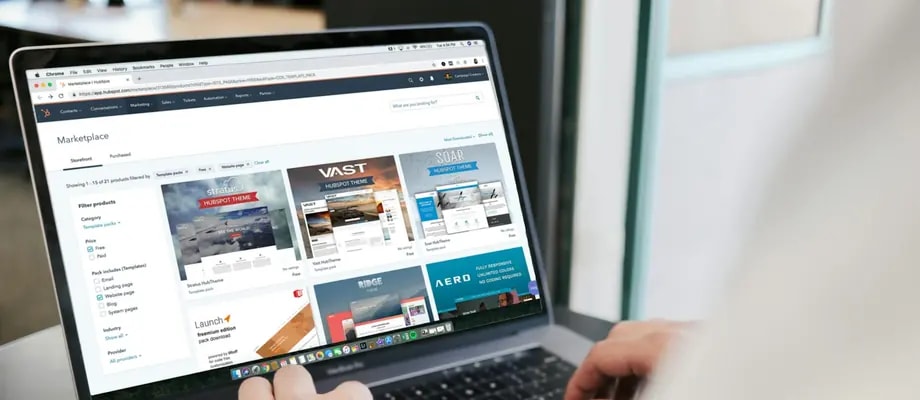
Website localization testing:
Storefronts, portals, and marketing sites, paired with our website localization services
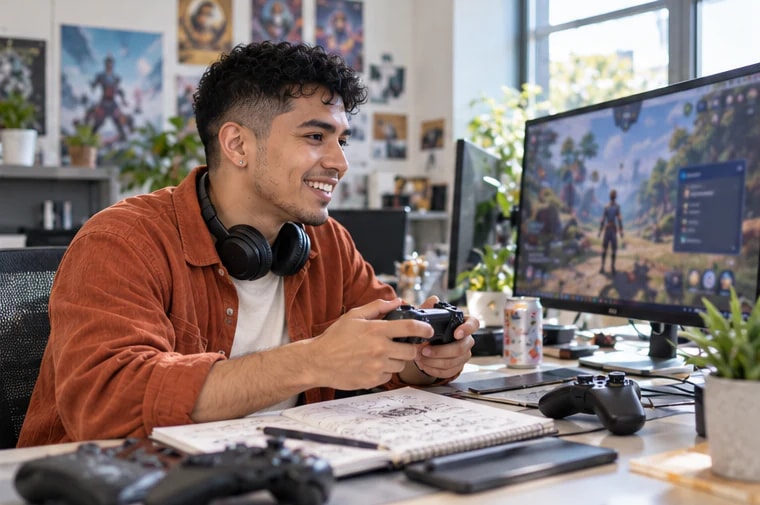
Technology and gaming products:
The same coverage approach, with context from our wider technology and gaming language work
Share your build and target locales, and we'll propose a coverage plan for the first test cycle.
Findings Your Developers Can Reproduce
Issue reports only help when a developer finds the problem and fixes it in one pass. Each issue we log includes:
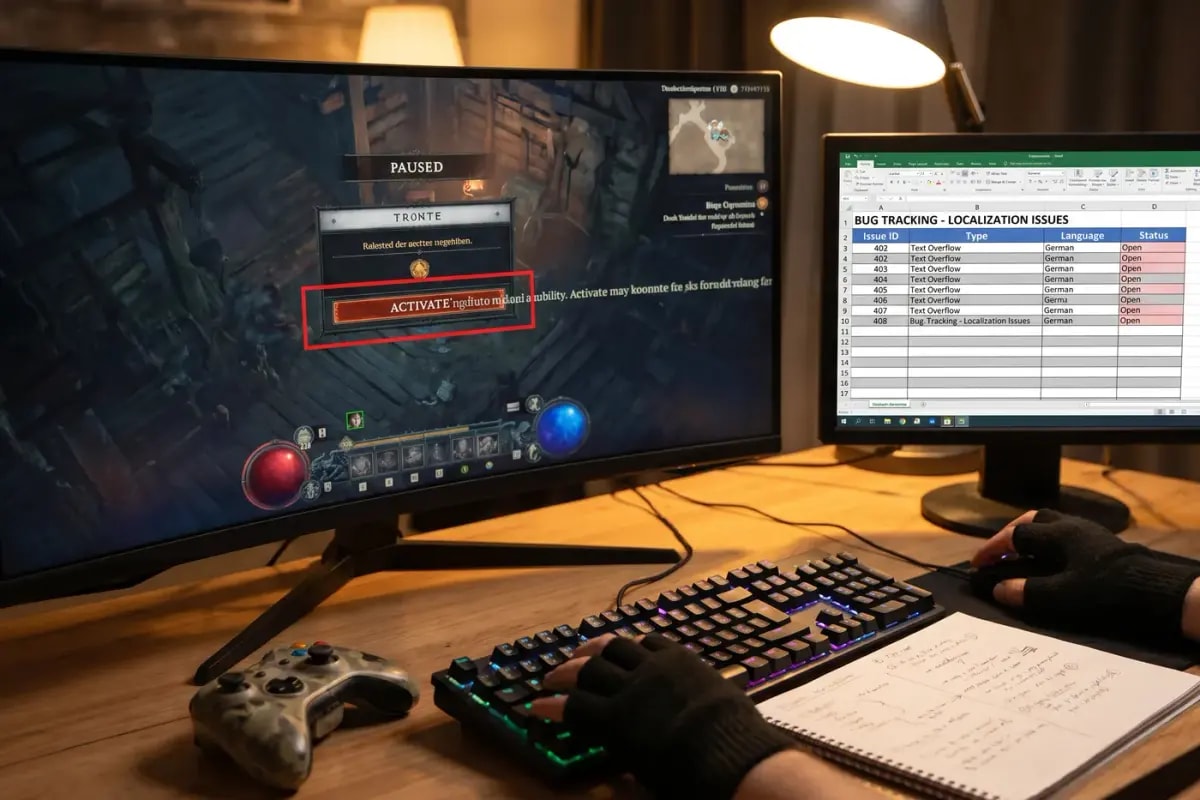
- The locale, build version, and device or browser
- The affected screen, string, or string ID
- What the tester expected and what appeared instead
- Steps to reproduce, with a screenshot or recording
- Category and severity, so your team sorts fixes by impact
During the reporting stage, our testers work directly with your developers. Questions get answered inside the issue, and corrected strings come from the same linguists who found the problem.
How Automated Checks Support Human Review
We use automated checks for anything that follows a rule: untranslated keys, missing strings, and text longer than its container. Our native testers then judge what rules miss, such as tone, context, and whether a phrase sounds natural to a local user.
AI-assisted checks run only with your approval, and a tester confirms each finding before it enters your report.
Security Controls for Unreleased Builds and Test Data
Pre-release builds, test accounts, and screenshots of unannounced features stay with the testers assigned to your project. The controls behind that are published in our Trust Center:

AES-256 for stored builds and screenshots,
TLS 1.3 for every transfer
Role-based, least-privilege access
to builds and test accounts
Multi-factor sign-in on every account
under a zero-trust model
Testers bound by confidentiality agreements,
plus a project NDA on request
Data processing and business associate agreements
available on request for projects that need them
How a Testing Project Moves Through Five Stages
Every test cycle runs through the same five stages, from first build to final retest. You know at each stage what we need and what you'll receive.
Requirements:
We confirm the product, target locales, build access, reference files, and release date. Your quote follows from those details.
Test planning:
Coverage, journeys, and severity ratings get agreed before anyone opens the build.
Testing:
Native testers run manual checks, with automated checks where the build supports them.
Reporting:
Issues reach your developers with evidence attached, and our testers stay on hand for questions.
Verification:
After fixes land, we retest the affected screens and record anything still open.
Schedule a test cycle with us, and we'll plan it around your launch date.
Localization Testing Costs and Project Timing
We build your localization testing cost from five factors: locales, devices or browsers, journeys, build readiness, and retest rounds. The same factors set the timing. Three screens in one app and a storefront in eight markets need very different test cycles. We confirm the schedule once build access and coverage are agreed.
For products with frequent releases, we set up a business or enterprise program. Each release cycle then runs with a dedicated project manager and a custom service level.
Localization Testing Services FAQs
Linguistic quality assurance (LQA) is the language part of localization testing. Localization testing also covers layout and functional checks, so it shows whether the product works in each language as well as how it reads.
Yes. With access to your tracker, our testers log each issue there in the same format as our reports. Without access, you get a structured report your developers import.
Only a working build and access to it. Glossaries, style guides, and string files speed up the first cycle, and we gather everything else during planning.
Yes. Locales enter testing as their strings land in the build, so testing runs in increments instead of waiting for the final release candidate.
Yes, for language and layout review. Screenshots don't show functional problems, so the report marks those journeys as untested.
Yes. Testing covers whatever text ships in the build, whoever translated it. Issues from third-party or AI translation get the same report format as any other.
Every issue records the build version, so changed strings stay visible. New or changed screens join the next retest round.
Yes. Game builds get the same language, layout, and functional checks, covering menus, dialogue, subtitles, and in-game text.
Localization Testing Services for Your Next Release
Every market you add gets tested in the running product before your users see it. You get a record of what we checked, what your developers fixed, and what remains open at launch.
Request a quote for testing the build behind your next market launch.
- ISO/IEC 27001:2022 Certified
- SOC 2 Type II Attested
- AES-256 at Rest
- TLS 1.3 in Transit
- ATA Corporate Member