
Audiovisual Translation Services

Our audiovisual translation services cover subtitles, captions, voice-over, and dubbing for training, marketing, and media teams. We check every language version in the player before you publish.

  • AES-256 at rest
  • TLS 1.3 in transit
  • MFA enforced
  • ATA Member

Get an Audiovisual Translation Quote

Tell us your languages, volume, and deadline.

Languages *
From
To
  • ISO 27001 Certified
  • NDA-Backed Confidentiality

Companies That Work with Us

Automotive, marine, and air ambulance companies rely on us for interpretation and translation. Here are four of them and the language work each one trusts us with.

Tesla has trusted Day Translations with Japanese interpretation since 2017. Mahindra has used our French and Spanish translation since 2015. TouchStar Integrated Fleet Automation has trusted Day Translations with Spanish interpretation since 2017. Air Ambulance 911 has relied on our Spanish to English certified translation since 2017.

Where Translated Video Loses Its Audience

A video can be translated well and still lose its audience. The trouble shows up when the translated words have to fit the timing, the voices, and the screen. These are the four problems we hear about most on a first call.

Subtitles Too Fast to Read

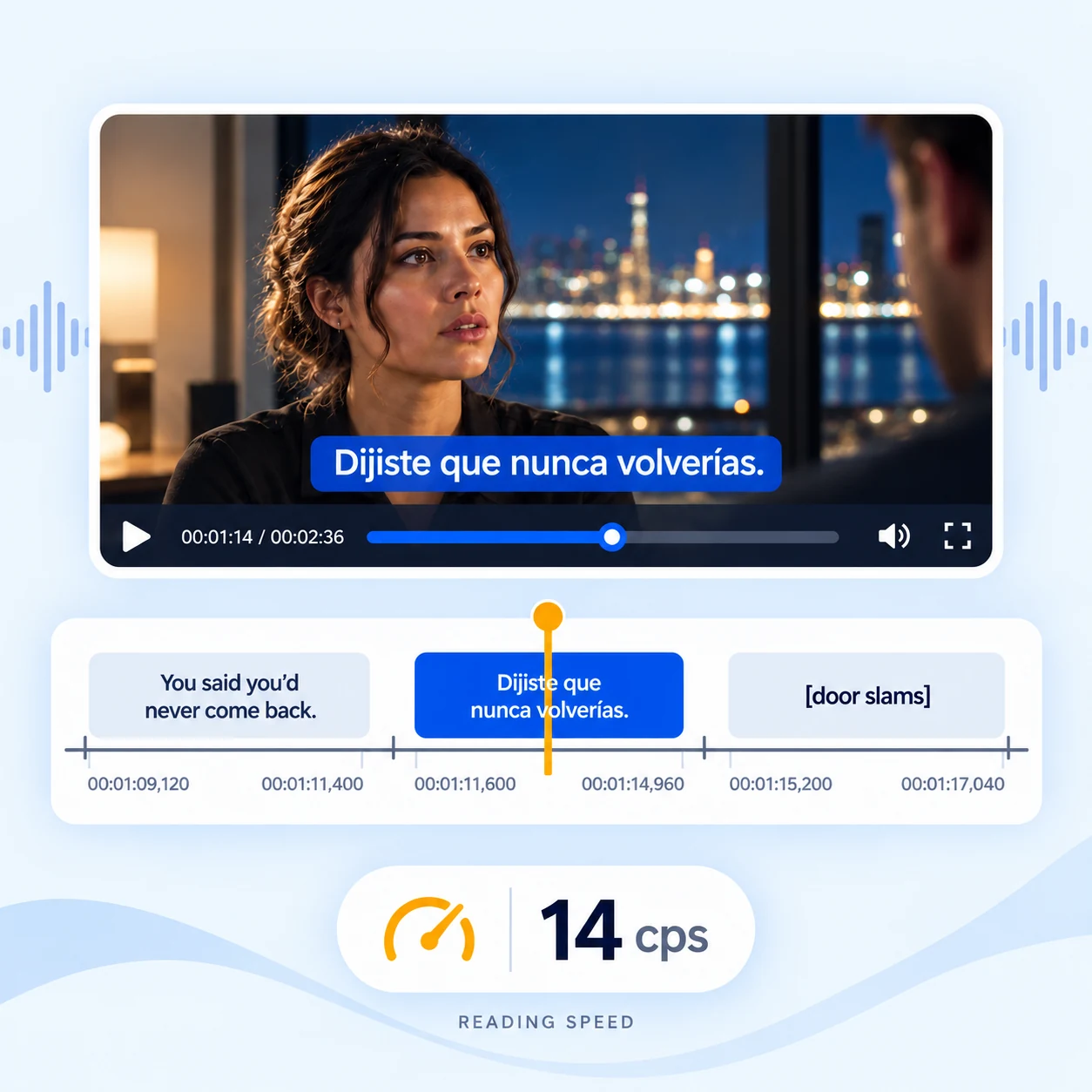
A longer translated line still needs to fit the subtitle event’s available reading time. When linguists don’t condense, viewers read instead of watching. Streaming platforms set hard limits. In its October 2022 Timed Text Style Guide, Netflix allows two lines per subtitle at most. Each subtitle stays on screen between five-sixths of a second and seven seconds. Files that break those rules come back from the quality control (QC) team.

Voices That Don’t Fit the Speaker

A narrator who sounds too young, too formal, or from the wrong region costs a training module its credibility. That damage comes faster than a mistranslated word does. Casting starts with the script.

On-Screen Text Left in English

Slide titles, lower thirds, charts, and software screenshots carry key information in demos and compliance training. A subtitle file alone leaves all of it in English.

Captions That Miss Accessibility Rules

For US state and local government bodies, captions become a legal requirement in 2027. Under 28 CFR 35.200, public entities must follow the Web Content Accessibility Guidelines (WCAG). Their web content and mobile apps must “comply with Level A and Level AA success criteria and conformance requirements specified in WCAG 2.1.” Those criteria include captions for prerecorded video. Entities serving 50,000 or more people must comply by April 26, 2027. Smaller entities and special district governments have until April 26, 2028. Every translated version they post needs its own captions.

Not sure which of these affects your video library? Walk through it with a project manager.

Audiovisual Translation Services for Every Video Format

Whether you need one service or all four, a single project manager coordinates the work. The four services below cover the full job, from transcript to finished video.

  1. Audiovisual translation services: a video player showing a Spanish subtitle at 14 characters per second.

    Subtitling and Closed Captioning

    Subtitles translate dialogue for viewers who don’t speak the source language. Closed captions (CC) add speaker names and background sounds for deaf and hard-of-hearing viewers. Our subtitlers time each line to the shot and the speaker. You get SRT, VTT, SCC, TTML, STL, or custom XML files. Our subtitling services team also handles caption-only, same-language projects.
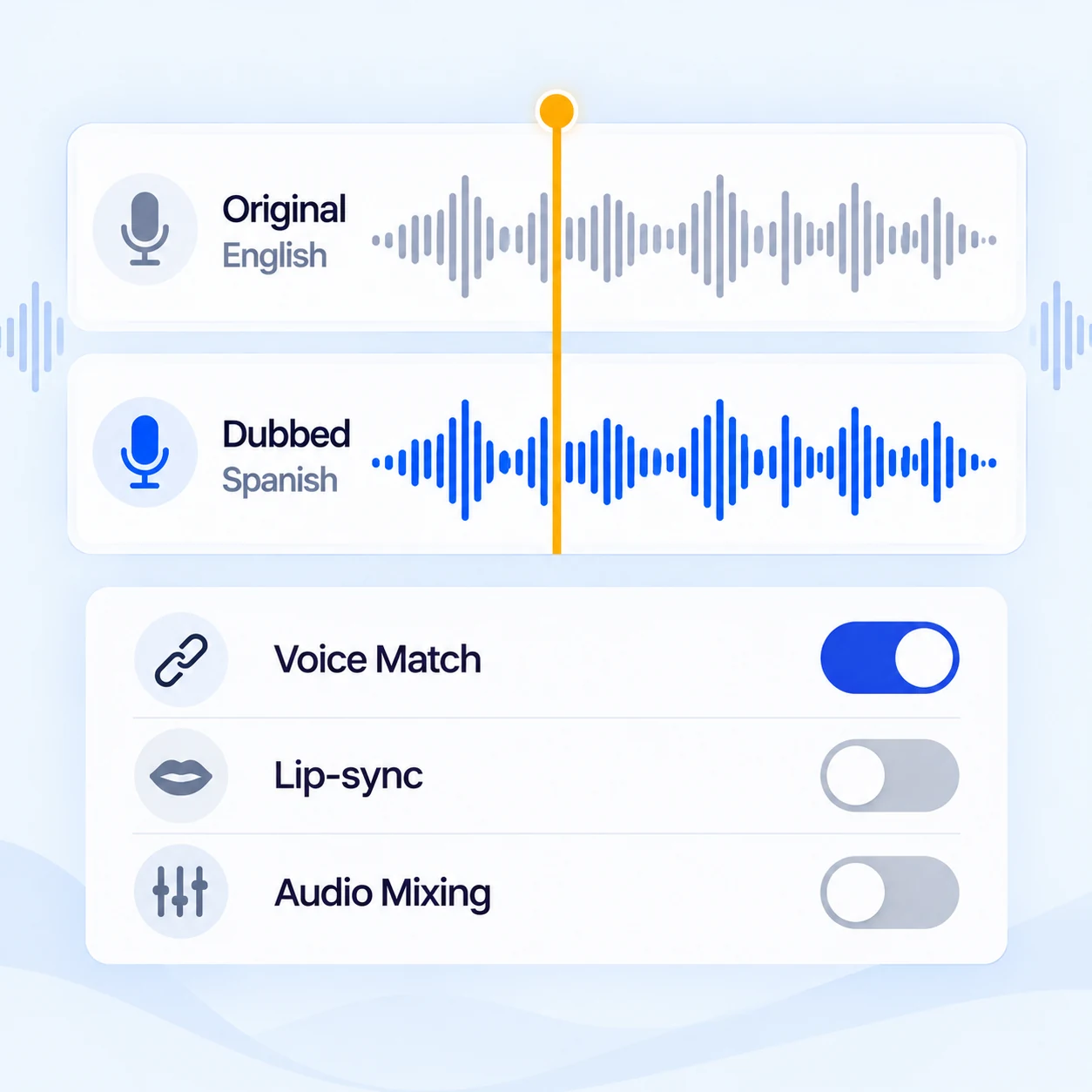
  2. Original English and dubbed Spanish audio tracks, with voice match, lip-sync and audio mixing settings.

    Voice-Over and Dubbing

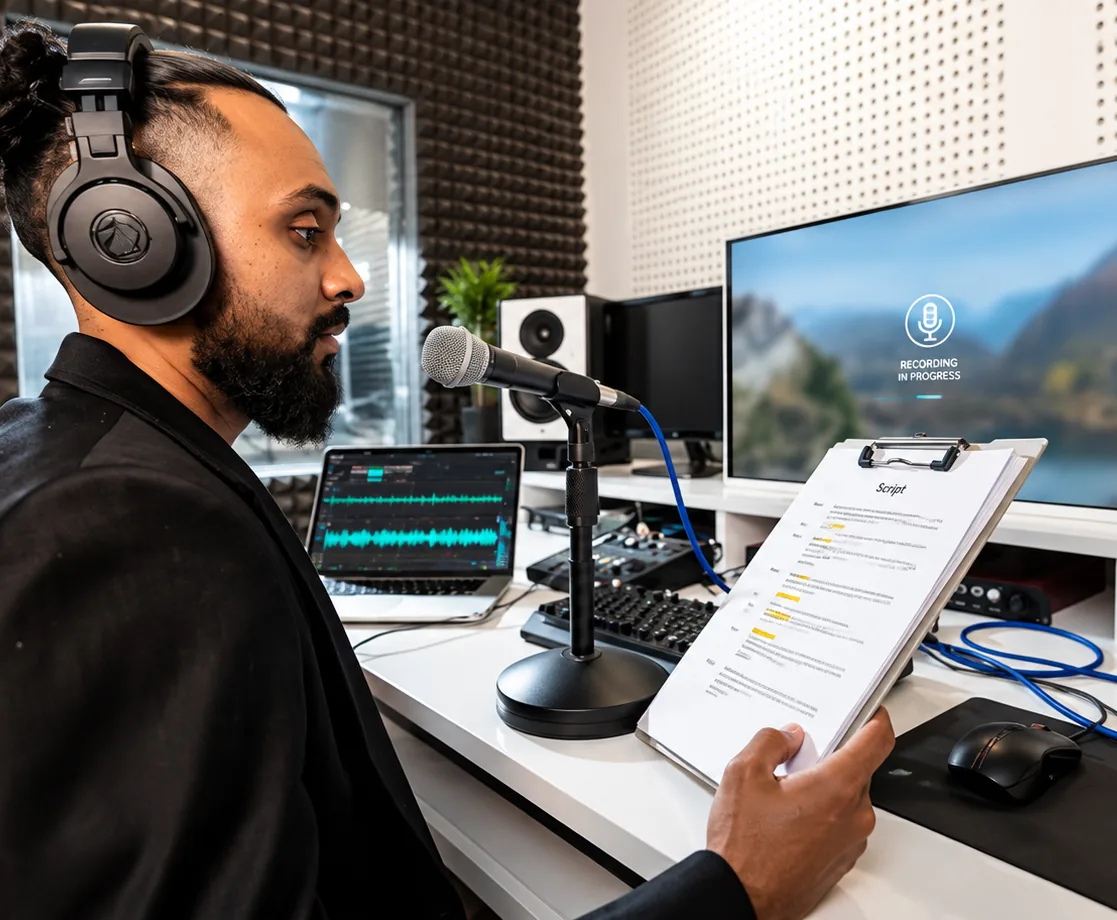
    Voice-over places a narrator over the original audio. It suits documentaries, training, and corporate video. Dubbing replaces the original dialogue with synchronized performances, which suits drama, animation, and TV. Native-speaking professional actors record each language from the approved script. We return studio-quality recordings in your preferred format, or hardcode them into your video. Our voice-over services cover 500+ languages.

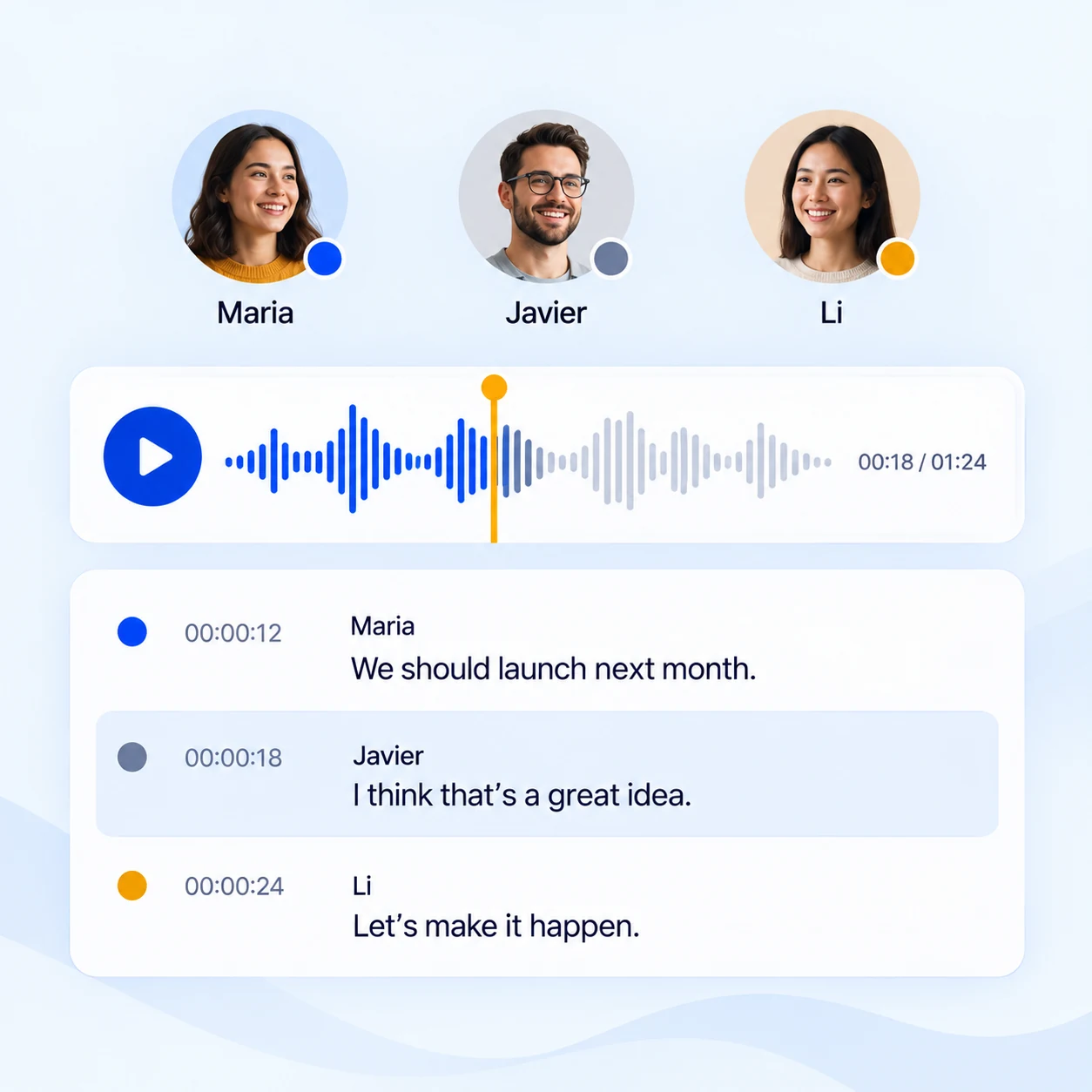
  3. Time-coded transcript of a three-person conversation, with each line tagged to its speaker.

    Transcription and Script Translation

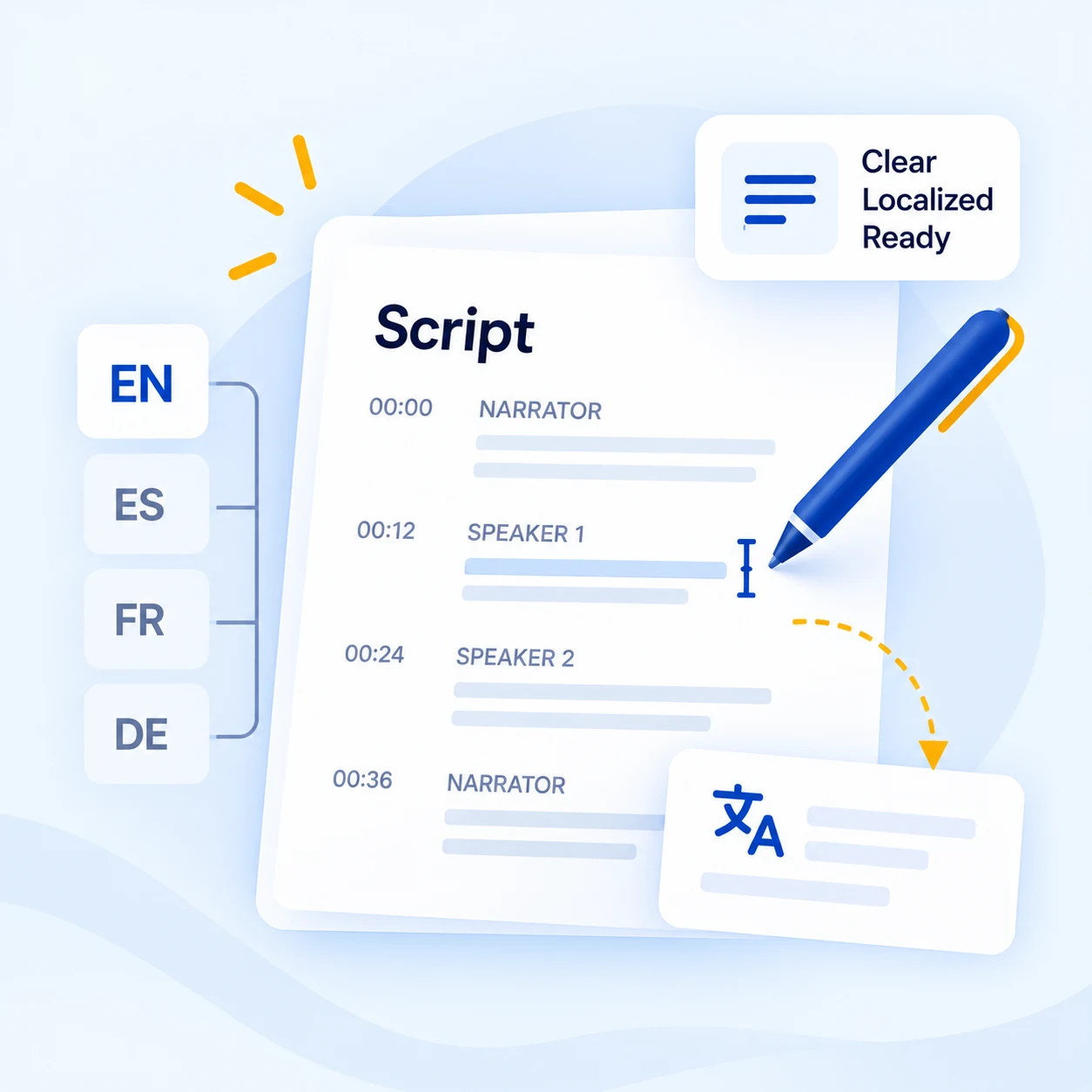
    Our video transcription team produces accurate, time-coded transcripts, even from difficult audio. You choose the style: verbatim, intelligent, or edited. That transcript becomes the source for every translated version. If you already have a script, our translators work from it directly. Our film script translation specialists adapt screenplays and song lyrics so the meaning survives the change in rhythm.

  4. Script with timecodes and speaker cues, set up for translation into Spanish, French and German.

    On-Screen Text and Graphics

    Our multimedia localization team translates titles, graphics, and on-screen text, then replaces them in the video.

Define the services, language versions, and delivery requirements for your organization’s video portfolio.

Subtitles, Voice-Over, or Dubbing: Which Fits Your Video?

The right option depends on who watches, where they watch, and the budget for each language.

  • Friends at a cafe watching a TV show with Spanish subtitles.

    Subtitles

    Best for
    Training libraries, interviews, social video, and viewers who watch with the sound off
    What drives cost and time
    Video length, number of speakers, and how much each line needs condensing
  • Voice-over artist in headphones reading a script at a studio microphone.

    Voice-over

    Best for
    eLearning narration, documentaries, and corporate explainers
    What drives cost and time
    Script length, number of voices, and studio time
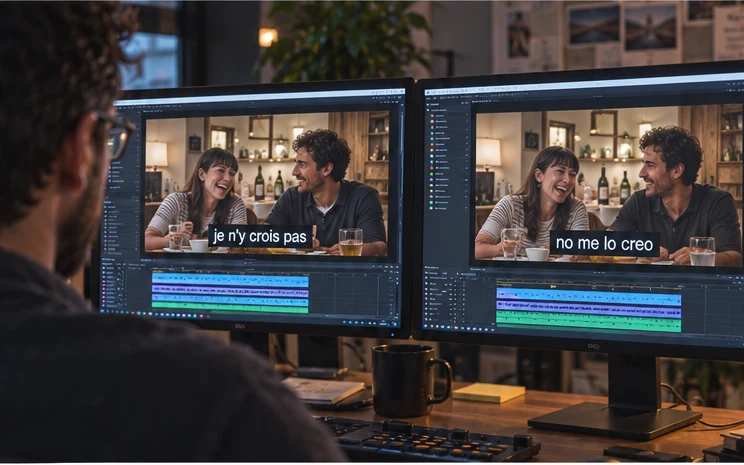
  • An editor comparing French and Spanish versions of the same scene on two monitors.

    Lip-sync dubbing

    Best for
    Drama, animation, TV, and film
    What drives cost and time
    Casting, line-by-line sync, and mixing; the slowest of the three

Subtitling moves faster than lip-sync dubbing on the same footage. If your launch date can’t move, release with subtitles first and add the dubbed version later.

Business Video We Translate

Most of the audiovisual translation we do for business teams falls into four groups. Each group below has its own files, reviewers, and deadlines.

  • Training and eLearning Courses

    Compliance modules, new-hire programs, and product training carry narration, slide text, and quiz screens. All of it needs translating. Our eLearning localization team handles the course files around the video.

  • Marketing and Product Videos

    Launch videos, product demos, and customer stories need copy that sells in the target language. Our linguists transcreate slogans and calls to action. That means rewriting them for the market instead of translating word for word.

  • Corporate Presentations and Internal Meetings

    Town halls, executive messages, and recorded meetings need to reach employees in their own language. Some of these recordings include plans the company hasn’t announced yet, so the security controls below apply to every file.

  • Film, TV, and Streaming Programs

    Independent films and TV shows need subtitles or dubbing that pass platform QC on the first submission. Full adaptation for release, including titles and marketing assets, belongs to our movie localization service.

How an Audiovisual Translation Project Runs

Every project starts with two things from you: the video and the place it will play. Our team then takes it through six steps, from quote to final files.

  1. 1. File review and quote.

    A project manager checks video length, number of speakers, and on-screen text. They also check the output spec for your platform or learning management system (LMS). Then they send the quote.

  2. 2. Transcript and glossary.

    A transcriber produces a time-coded transcript. Names, product terms, and recurring phrases go into a glossary that every linguist on the project uses.

  3. 3. Translation and adaptation.

    A native linguist translates the script and condenses lines to a comfortable reading speed. A second linguist then revises the translation.

  4. 4. Timing, recording, or dubbing.

    Subtitlers time each line to the shot. For voice-over and dubbing, native-speaking actors record from the revised script.

  5. 5. Review in the player.

    A reviewer watches the finished version with the sound on and checks timing, line breaks, on-screen text, and sync.

  6. 6. Final files in your format.

    You receive sidecar files, the finished video, or both, named to your spec. Corrections from your reviewers go back into the glossary for the next video.

Have a sample clip and a target platform in mind? Get a price for that clip.

Where AI Fits in Video Translation

Artificial intelligence (AI) subtitles and synthetic voices cut costs on high-volume, low-risk video, such as internal updates and support clips. People still check the output. On our AI subtitling projects, our subtitlers refine the pacing and terminology. On AI voice-over projects, senior sound engineers review every waveform. We clone a voice only from a consenting speaker. AI subtitling covers over 125 languages, and AI voice-over covers more than 100 languages and accents.

How We Protect Unreleased Video and Scripts

Pre-release episodes, unannounced products, and recorded leadership meetings are the files a leak hurts most. These controls apply to every audiovisual project:

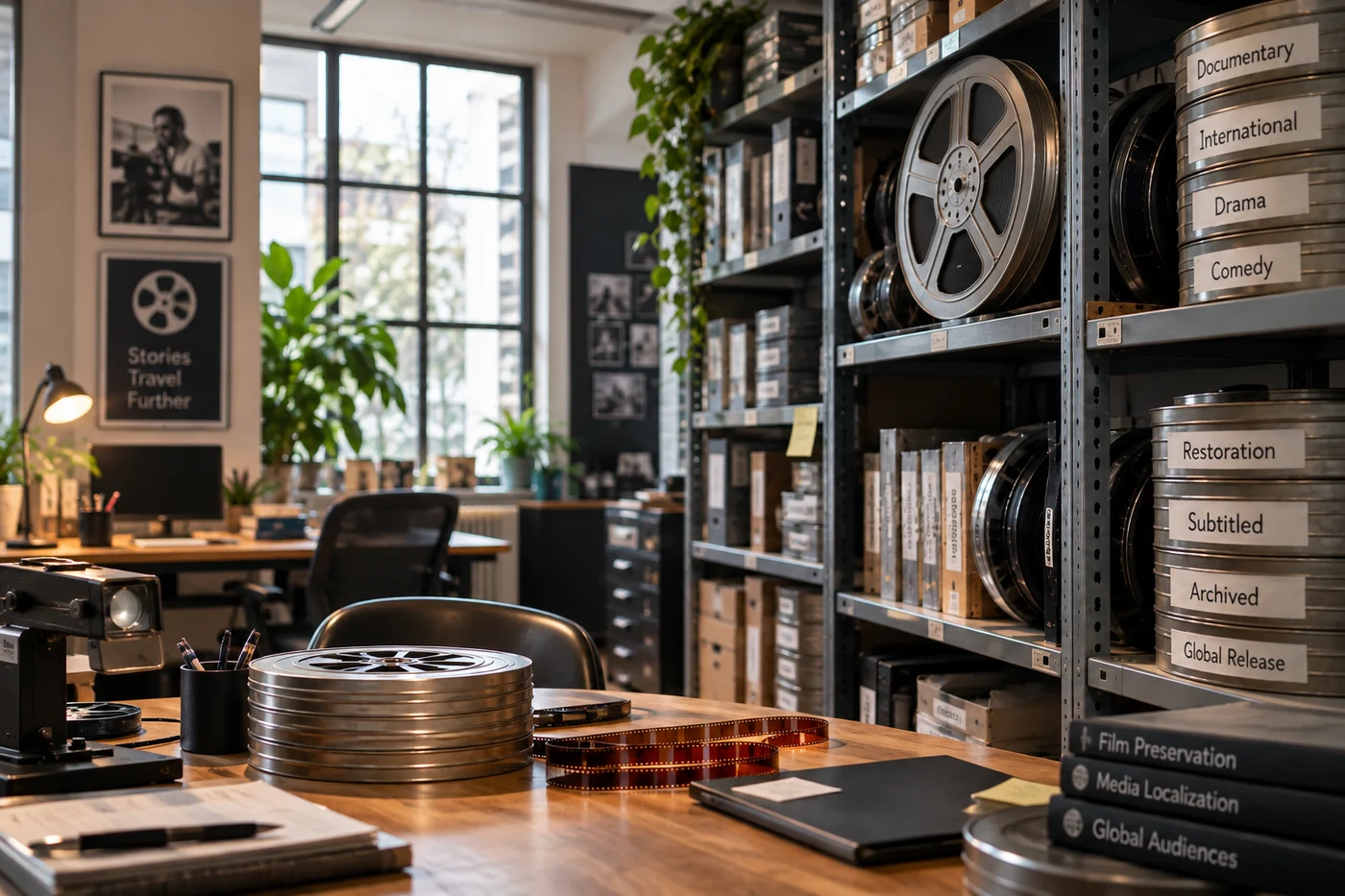
A film archive office with labeled reel canisters on steel shelves and a stack of reels on the desk.
  • Role-based permissions with least-privilege access

  • Certificates, reports, and agreements shared with verified organizations on request

  • Files encrypted with AES-256 at rest and TLS 1.3 in transit

  • Zero-trust access, with multi-factor authentication (MFA) enforced

  • EU data stays in the EU

Our Trust Center lists every control in full.

Audiovisual Translation Case Studies

Two projects from our case study library show how we run voice and media-related work.

GlenFilm: Document Translation for a Video Studio

GlenFilm is an Eastern European video production studio with offices in Ukraine and Germany. The studio creates audiovisual material for international brands. We translated a range of its documents into Estonian, Slovakian, Romanian, Hungarian, Latvian, Lithuanian, Bulgarian, Croatian, and Greek. The client paid one predictable rate, and we made any needed edits free of charge. The GlenFilm case study covers the full engagement.

Voice Talent for a Silicon Valley AI Venture

Since 2016, we’ve worked with a Silicon Valley venture that builds AI and deep learning products. Our global network of voice talent produced multilingual voice commands for its products. We developed over 200 commands, each with natural phrasing in the right accent. Dialects included Canadian French, Russian, Taiwanese Mandarin, Australian English, American Spanish, UK English, and Korean-accented English.

How Audiovisual Translation Is Priced

Four things set the price: video length, the services you choose, the number of target languages, and the number of speakers or voices.

Subtitling costs less than lip-sync dubbing, which adds casting, studio time, and line-by-line sync. Rush options are available for launch dates that can’t move.

Send one video file and your target languages, and your project manager prices the project for you.

Memberships and Compliance Documents

Day Translations is a corporate member of the American Translators Association (ATA). For vendor reviews, we share certificates, reports, and agreements with verified organizations on request.

  • AES-256 at rest
  • TLS 1.3 in transit
  • MFA enforced
  • ATA Member

Audiovisual Translation Services FAQs

Compliance, credentials, turnaround, and cost — answered before you ask.

Still unsure? An expert answers 24/7/365.

Call an expert

Start Your Audiovisual Translation Project

L&D, marketing, and media teams start with three details: the video, the target languages, and where the translated versions will play. Your project manager comes back with the right service mix and a price.

Set the language scope, production requirements, and launch schedule for your team’s video program.