Phone Interpreter Services
We provide phone interpreter services for hospitals, law firms, call centers, and police departments. You get a professional interpreter on a live call, joining from the phone or computer your staff already use.
Every department works from the same interpreter line, the same billing, and the same security controls. Calls run through Day Interpreting, our phone and video interpreting platform.
Our team will set up one interpreter line around the languages and call the volume your departments handle.

- ISO/IEC 27001:2022 Certified
- SOC 2 Type II Attested
- AES-256 at Rest
- TLS 1.3 in Transit
- ATA Corporate Member
Where Interpreted Calls Break Down
Many interpreted calls go wrong before the interpreter says a word, while the caller is still waiting. These four problems come up in teams without a set interpreter line. Here's how our setup fixes each one.
Staff goes looking for a bilingual colleague.
The caller holds while someone walks the floor asking who speaks Portuguese.
Our toll-free line puts an interpreter in that language on the call, so nobody has to leave the desk.
The call turns into a relay.
Staff calls the interpreter on one line and the customer on another, then repeats everything twice.
Our line takes extra callers, so everyone hears everyone on one call.
The interpreter doesn't know the vocabulary.
Claims calls and discharge calls use different words.
We screen and vet every interpreter, and we keep training them in the terminology of the industries they cover.
Sensitive details travel over an unsecured channel.
Patient histories and case facts come up on these calls.
Our platform encrypts data at rest and in transit, and HIPAA-covered entities sign a Business Associate Agreement with us.
Four Call Types Our Phone Interpreters Handle
Phone interpreting fits any conversation where the voice carries the meaning. Our interpreters work in four call patterns, all from the same account.
Inbound Calls from Customers and Patients
Say a Spanish-speaking caller reaches your front desk or claims line. Our interpreter joins the call and renders both sides, so your staff member answers the question in English.
Outbound Calls to Clients and Families
Some calls start on your side: a patient's family member, a witness, or a policyholder who speaks Vietnamese. Our interpreter is already on the line when the other person answers, ready to introduce the call in their language.
Speakerphone in the Room
Not every conversation happens over a distance. At a bedside or a front counter, our interpreter works over speakerphone. The conversation runs face to face, with the interpreter's voice in the middle.
Contact Center Teams
For call center interpreting, our interpreters join agents' calls through the dashboard, at headquarters or an off-site center. The agent keeps ownership of the customer, and the interpreter renders both sides.
Organizations That Rely on Our Phone Interpreters
Our phone interpreters work for teams whose calls can't wait for a scheduled appointment. Here's what each one uses them for:
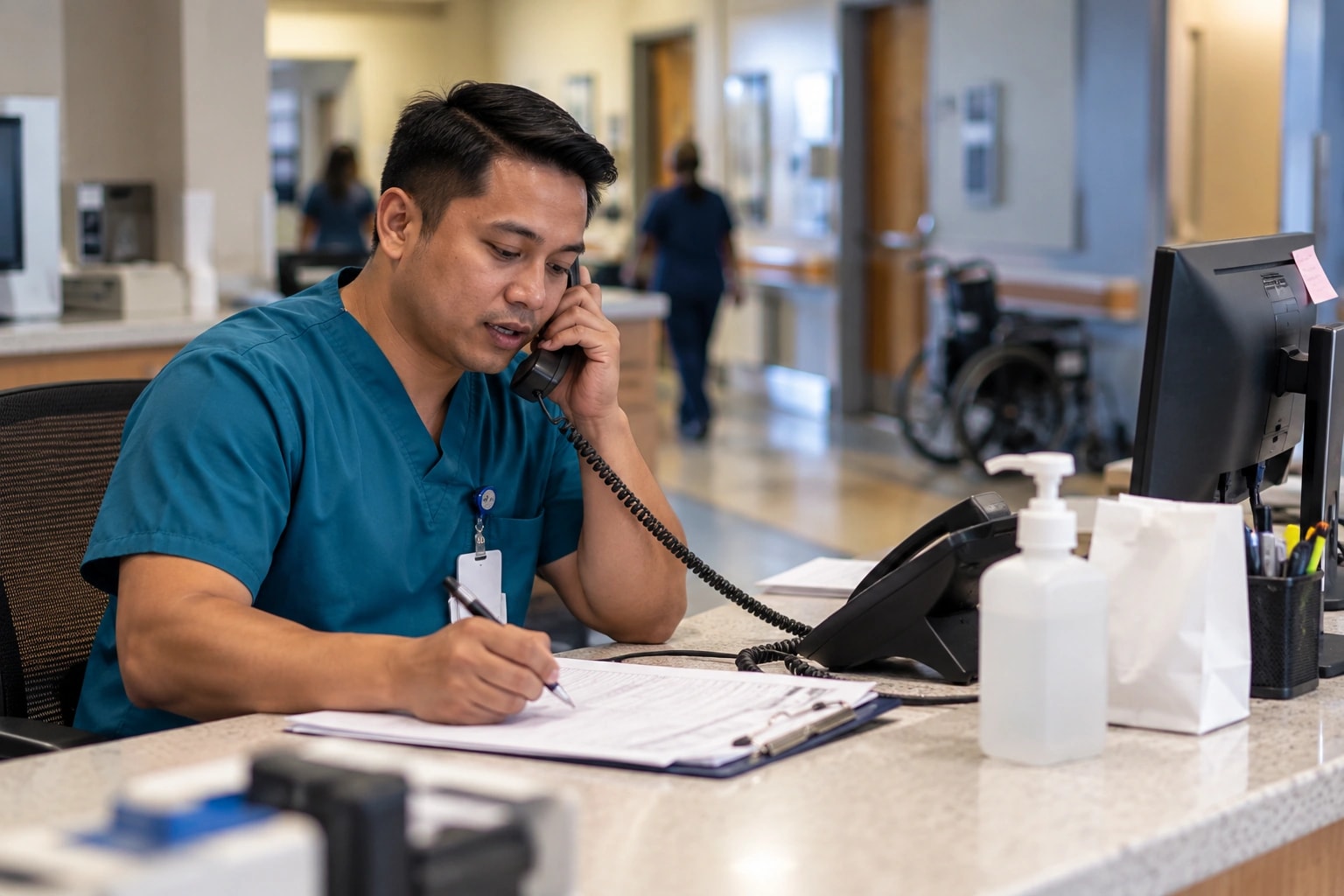
Hospitals and clinics: Appointment calls, triage lines, follow-ups after discharge, and pharmacy questions

Law firms: New-client calls, witness contact, and short calls with clients between meetings

Call centers: Customer service, billing disputes, and claims lines that take calls in any language
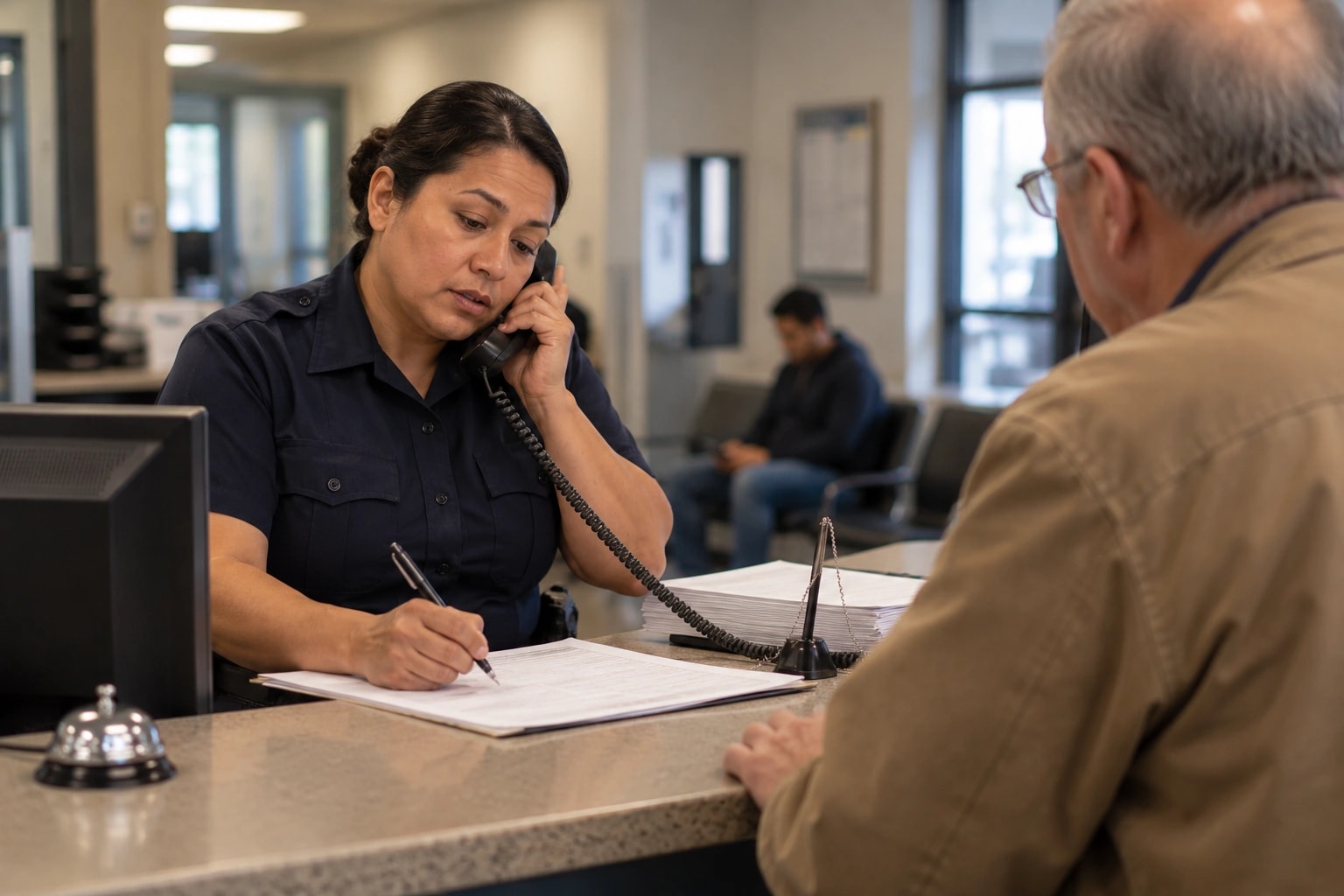
Police departments: Calls at the front counter, follow-ups with victims and witnesses, and non-emergency reports
Whether your calls come from a clinic, a law office, or a contact center, our team sets up one account that covers every department.
Choosing Between Phone, Video, and On-Site Interpreting
Phone works best when words carry the whole conversation. When the call also depends on faces or documents, another mode fits better.
| Conversation | Best fit | Why |
|---|---|---|
| Appointment reminders, billing, and status updates | Phone | Short calls where the voice carries everything |
| New-client calls and follow-ups with patients | Phone | Staff connect in the moment, with no booking |
| Telehealth visits and remote consultations | Video | The clinician and the patient need to see each other |
| Trials, depositions, and consent conversations | On-site | The interpreter needs to see every speaker and every exhibit |
Video sessions run through our video remote interpreting team. For sessions that need someone physically present, our on-site interpreting team books an interpreter in the room.
Who Joins Your Call
We screen and vet every interpreter on our line before their first call. Our team keeps training them in industry practice and terminology, so a hospital call and a law firm call each get the right vocabulary.
Phone calls run in consecutive mode. One person speaks, then the interpreter renders it, then the other person answers. That rhythm keeps both sides in step, and nobody talks over the interpreter.
How Day Interpreting Runs Your Calls
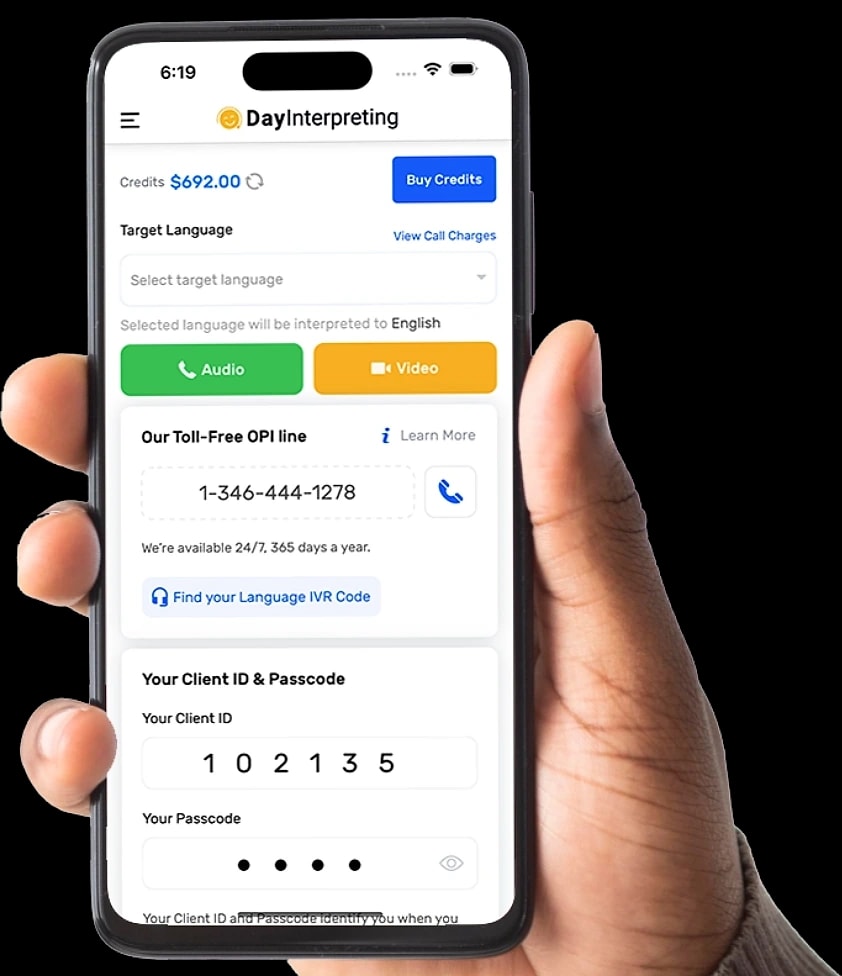
Day Interpreting is our phone and video interpreting platform. Every interpreted call your staff make runs through it, and it gives your organization three things:
Two ways to connect. Staff dial a toll-free number from any phone, or start the call from the web dashboard on a computer.
Phone and video in one place. Video sessions run through the Day Interpreting app, a web browser, or an enterprise portal, with the same interpreter network as phone calls.
One company account. Your organization gets its own client ID, and billing for every department runs through that single account.
How Your Account and Calls Work
Setup happens once for the whole organization. We need three details to open your company account, and then our team takes over.
What We Need from You
- The departments and sites that will use the line
- The languages your staff handle most, with expected call volume
- A billing contact for the company account
What We Do Next
We open your company account. Your organization gets a unique client ID, and a passcode protects every call made under it.
We give your staff access. Each department gets its dial-in and dashboard details under the company account.
We connect each call. One of our professional phone interpreters joins in the requested language, and the conversation starts.
For several departments on one account, our team plans the setup with you.
How We Protect Interpreted Calls
Calls carry patient details, account numbers, and legal strategy. Our protection rests on the controls listed in our Trust Center:

AES-256 encryption
at rest and TLS 1.3 in transit
Zero-trust architecture
with multi-factor authentication enforced
Role-based permissions
and least-privilege access
NDA-bound workforce
EU data stored in the EU
Business Associate Agreement
for HIPAA-covered entities
Phone Interpreting Services FAQs
It's short for over-the-phone interpreting, also called telephone interpreting services in some contracts. Buyers use the term to separate audio-only interpreting from video remote interpreting (VRI) and on-site interpreting.
Yes, in everyday use. Strictly, interpreting is spoken, and translation is written, so a live call always uses an interpreter. Written records from the call, such as letters, forms, or contracts, go to our translation services team instead.
Yes, when the interpreter is qualified. Under 45 CFR 92.4, a qualified interpreter for limited English proficiency works through a remote interpreting service or an on-site appearance. So the rule looks at the interpreter's qualifications, and either channel can meet it.
Yes. Our request form takes a date, start time, time zone, and expected duration. That suits planned calls, such as a conference call with a client overseas, while on-demand phone interpreting covers everything unplanned.
Only when the court allows remote appearance, and mainly for short status conferences and scheduling calls. Trials and evidentiary hearings go to our court interpreting team, which checks each court's credential rule.
Phone suits calls with a handful of speakers. Conferences with an audience need simultaneous interpreting and equipment, which our conference interpreting team plans.
Yes. Any phone that dials the toll-free number works, so field staff, home-care nurses, and adjusters on site visits use the same account as the office.
No, not for pay-as-you-go accounts. Day Interpreting doesn't bind these accounts to a contract, so your team uses the service only when a call needs it. Organizations with steady call volume can choose an enterprise contract instead, with NET30 billing and terms set around the languages they use most.
No. Under the Section 1557 rule, a covered healthcare provider must not require a patient with limited English proficiency to provide or pay for their own interpreter. The provider covers the interpreter.
Phone Interpreters for Every Call Your Team Takes
Your hospital, firm, or call center already knows which languages ring in most. We'll set up one account for the whole team, and our phone interpreter services cover every call from then on.
We'll send a quote for your account before anything goes live, so your team's first interpreted call starts on known terms.
- ISO/IEC 27001:2022 Certified
- SOC 2 Type II Attested
- AES-256 at Rest
- TLS 1.3 in Transit
- ATA Corporate Member